Successful Narrative Games — When Gameplay Becomes Story
Contents
- I. The Common Mistake — Story as Decoration
- II. Mechanic as Emotional System
- The Last of Us and the Design of Survival
- Scarcity as Theme
- Combat Weight and Character Identity
- The Hospital Sequence — When Action Becomes Moral Statement
- III. Structural Mechanics as Narrative Theme
- BioShock Infinite and the Architecture of Fate
- The Illusion of Choice
- Respawn and Multiverse Logic
- Linear Design as Philosophical Statement
- IV. Three Design Conditions for Gameplay Becoming Story
- 1.Mechanics Must Reinforce Theme
- 2.Player Action Must Carry Emotional Weight
- 3.Experience Must Replace Explanation
- Conclusion
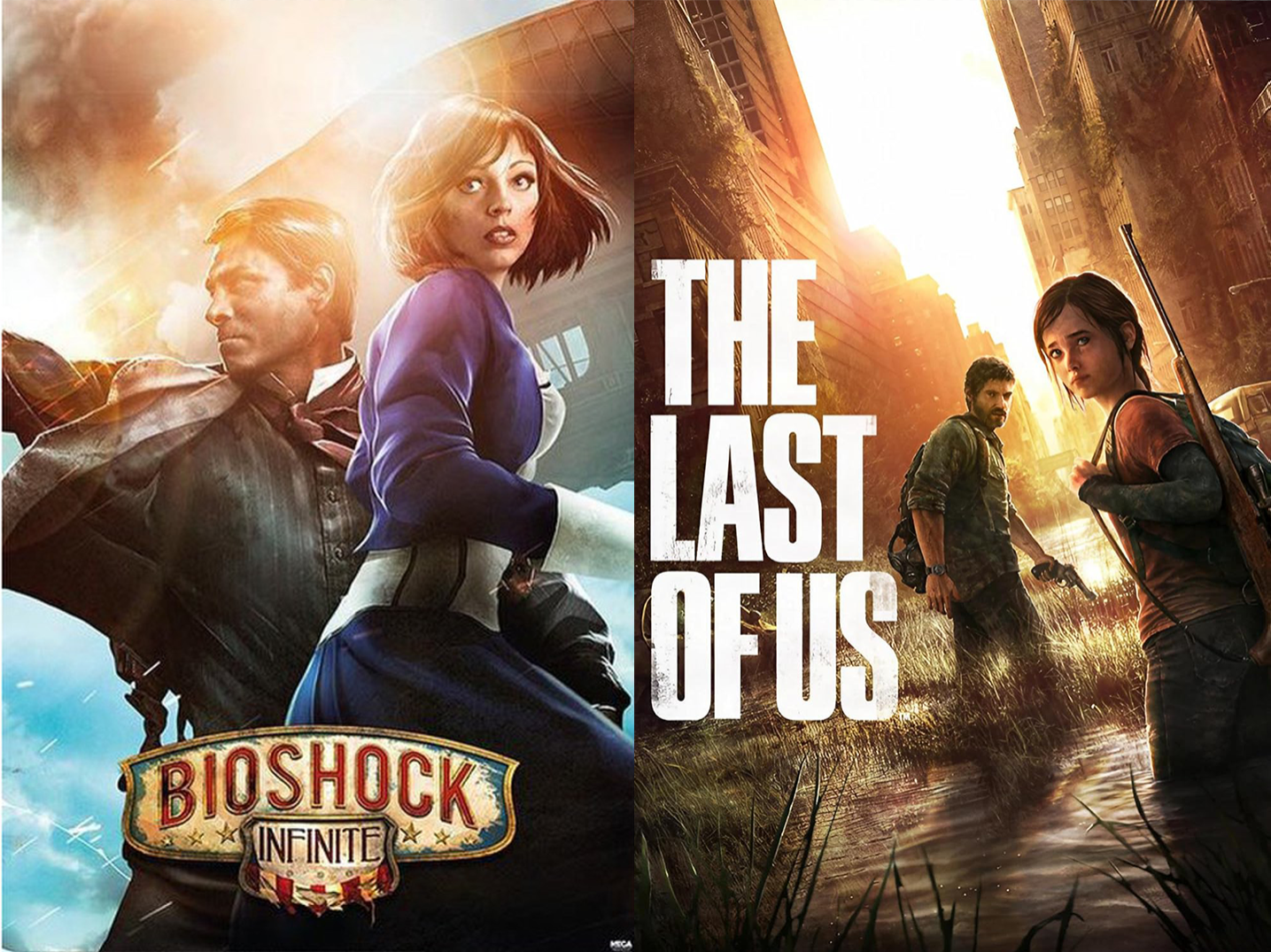
Many games claim to be “story-driven,” but in reality, their stories live outside of gameplay.
The emotional moments happen in cutscenes. The character development happens in dialogue. The themes are delivered through scripted events. Gameplay, meanwhile, functions as a challenge system — something the player completes in order to unlock the next piece of narrative.
Well,successful narrative games work differently.
In the most powerful story games, gameplay is not separate from narrative. The mechanics themselves express character, theme, and conflict. The player does not simply witness the story — they enact it. The rules of the system become the language of storytelling.
When gameplay becomes story, removing the cutscenes would not remove the emotional experience. The meaning of the narrative would still be present in the way the player moves, fights, manages resources, makes decisions, and inhabits the world.
This blog explores how certain games achieve this integration — not by attaching narrative to gameplay, but by designing mechanics that are narrative.
I. The Common Mistake — Story as Decoration
Many so-called “narrative games” still treat story as something layered on top of gameplay. The emotional beats happen in cutscenes. The character arcs unfold in dialogue sequences. The theme is explained through scripted scenes. Meanwhile, gameplay exists in a separate space — as combat, traversal, puzzles, or progression systems that operate independently from the narrative.
In these cases, story and gameplay coexist, but they do not interact.
If you removed the cutscenes from such a game, the gameplay would still function. You could still shoot, jump, level up, or solve puzzles. But the emotional meaning would largely disappear. The systems themselves would not carry the weight of the story.
This separation creates a structural gap.
Gameplay becomes the “work” the player performs in order to unlock narrative rewards. Story becomes a decorative layer that justifies mechanics, rather than something expressed through them.
As designers, this is a tempting structure. It is safer. We can write a strong script and build a functional system without forcing them to speak the same language. But this separation also limits the medium. It reduces games to interactive movies with mechanical intermissions.
The most powerful narrative games break this pattern.
They do not ask: “How do we attach story to mechanics?”They ask: “How do we design mechanics that express story?”
That distinction is small in wording — but enormous in design implication.
II. Mechanic as Emotional System
The Last of Us and the Design of Survival
The Last of Us
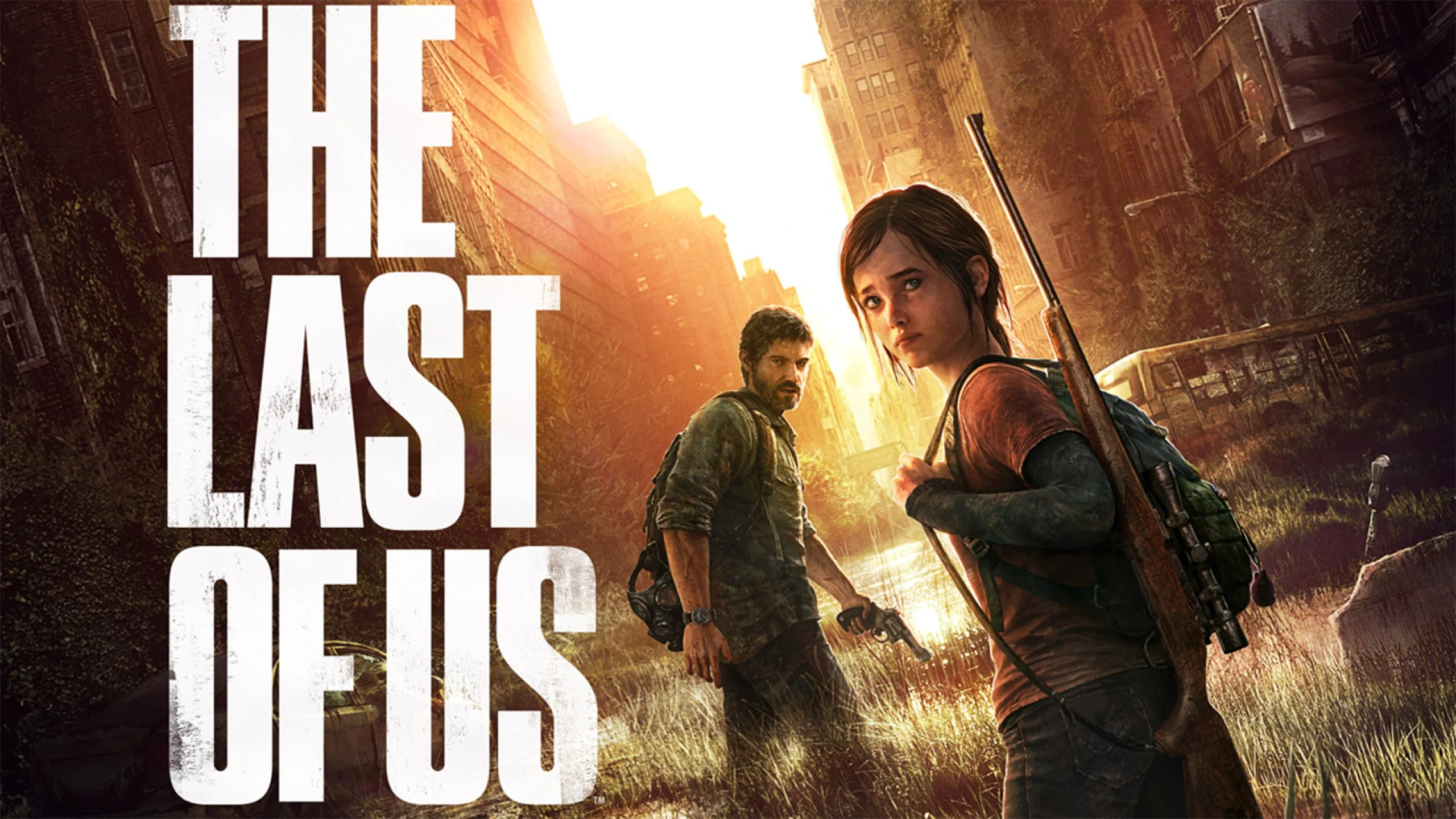
If gameplay can become story, then mechanics must do more than create challenge — they must generate emotional experience.
In The Last of Us, survival is not simply a narrative theme. It is a mechanical condition. The systems are designed to make survival feel heavy, uncomfortable, and morally complicated.
Scarcity as Theme
Scarcity in The Last of Us is not just difficulty tuning. It is emotional architecture.
Ammunition is limited.
Crafting materials are rare.
Healing costs resources that could have been used elsewhere.
Stealth is often safer than combat — but slower and more tense.
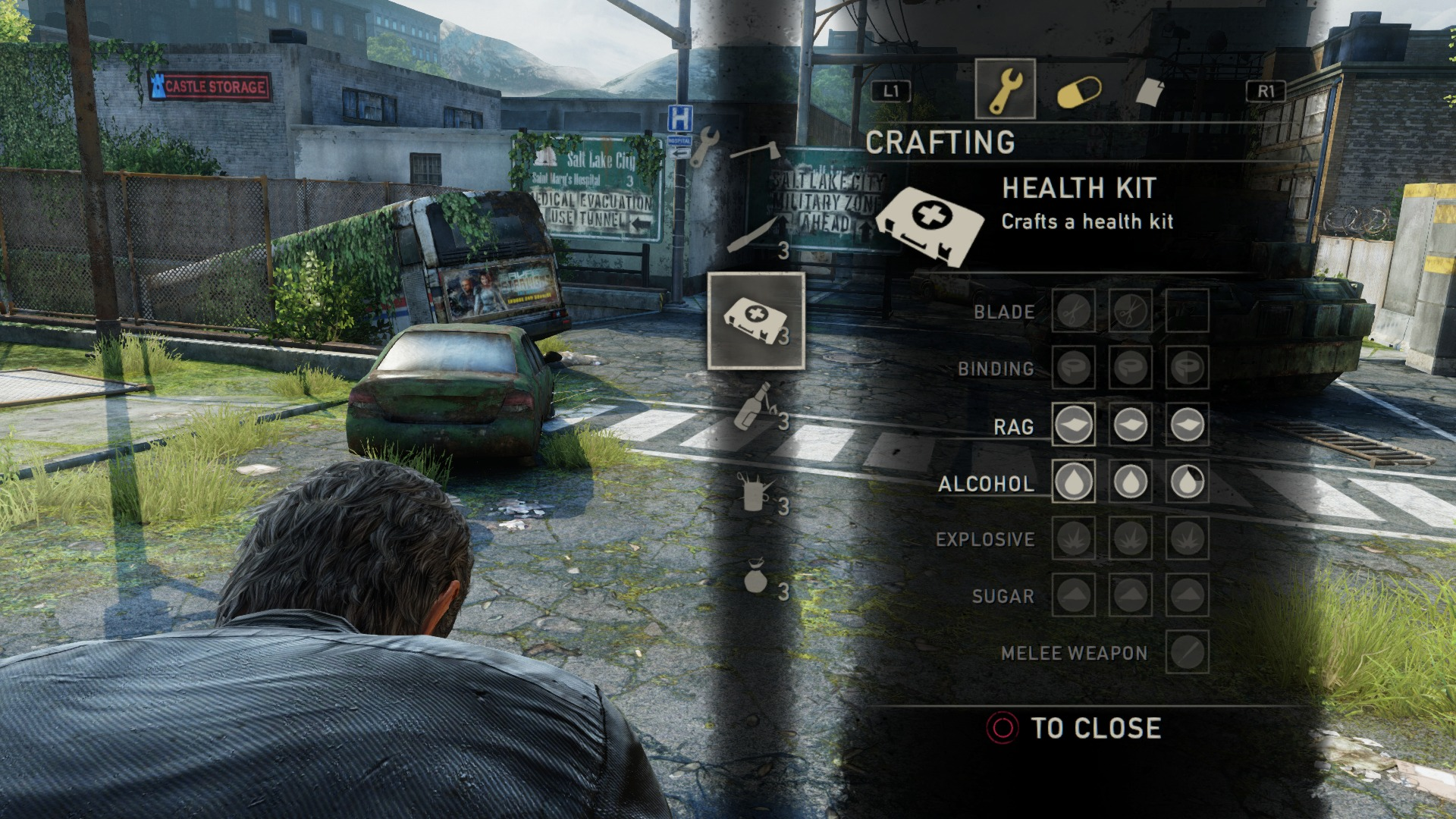
The game forces players into uncomfortable trade-offs. Every decision carries weight: Do I spend this bottle to distract an enemy, or save it for crafting? Do I risk confrontation, or avoid it entirely?
The scarcity system does something powerful: it makes violence feel expensive.
This is not a heroic power fantasy. It is attrition.
The mechanics embody the world’s cruelty. The narrative does not have to repeatedly tell you that survival is brutal — the system makes you feel it.
Combat Weight and Character Identity
Joel does not fight like an action hero.
His animations are slower. Melee combat is messy. Enemies do not fall cleanly. Gun recoil feels heavy. Struggles are prolonged.
This mechanical “weight” expresses character identity.
Joel is not designed as a symbol of mastery. He is a tired survivor.
If combat were fluid and stylish, it would contradict the story. Instead, the friction in the mechanics reinforces who Joel is.
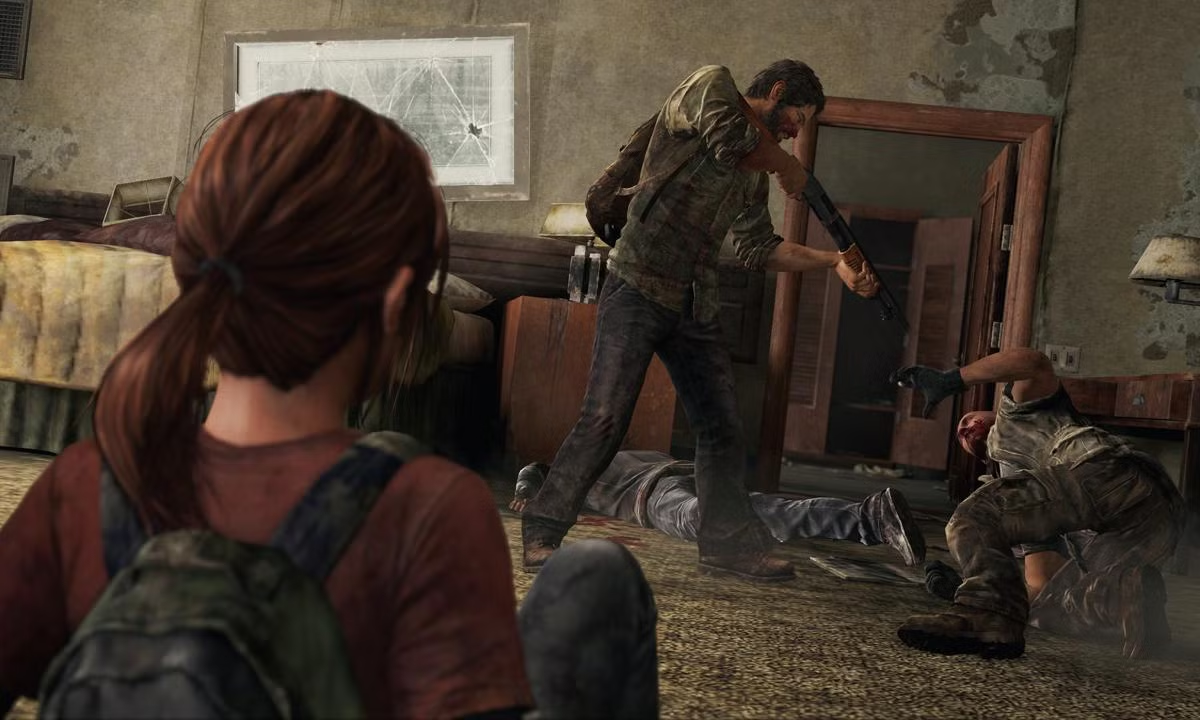
Here, mechanics become characterization.
You do not just learn about Joel through dialogue — you inhabit him through constraint.
The Hospital Sequence — When Action Becomes Moral Statement
The final hospital sequence is often discussed in terms of narrative choice. But what makes it powerful is not the cutscene — it is the action.
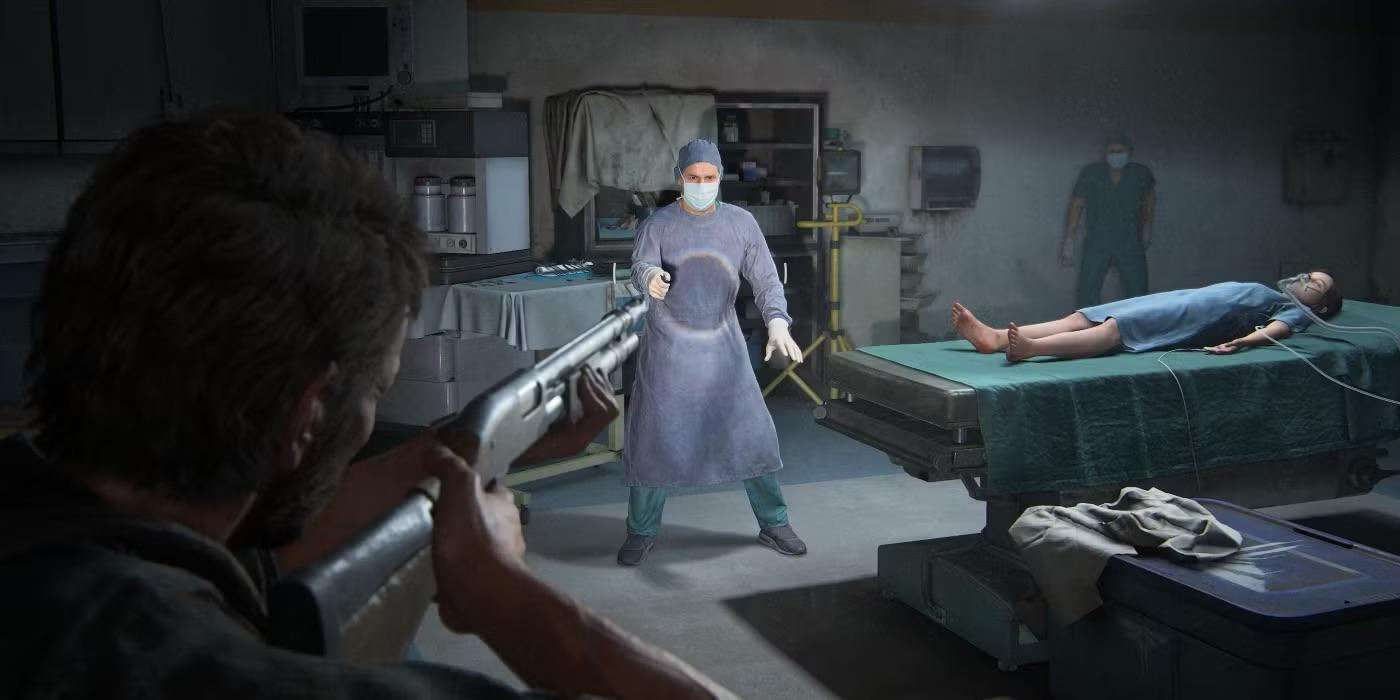
The player must move forward.
The player must shoot.
The player must carry Ellie out.
The game does not present this as a dialogue option. It presents it as gameplay. You cannot remain neutral. You cannot skip it. You must perform the act.That design choice transforms the player from observer to participant.The moral ambiguity is not something you watch. It is something you enact.And because you enacted it, the emotional weight belongs to you.This is the moment when gameplay fully becomes story.
In The Last of Us, narrative does not sit above mechanics. It is embedded within them. Scarcity creates emotional tension. Combat weight expresses character. Forced action creates moral implication.
The systems are not supporting the story. They are telling it.
III. Structural Mechanics as Narrative Theme
BioShock Infinite and the Architecture of Fate
BioShock Infinite
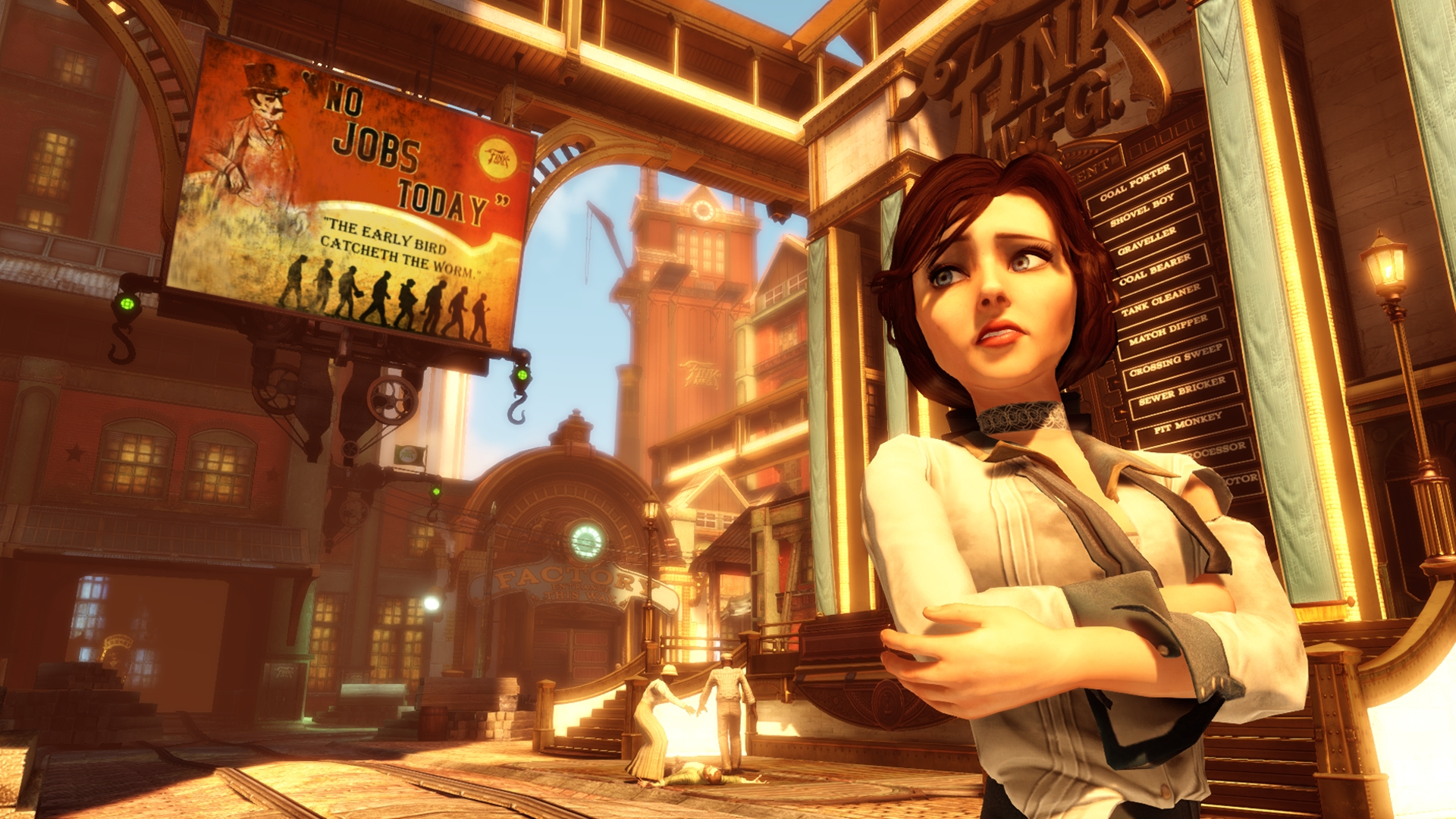
BioShock Infinite expresses narrative through structural mechanics.
The theme of BioShock Infinite is not survival. It is inevitability. Fate. The illusion of choice.
And instead of merely telling that story through dialogue, the game builds it into its structure.
The Illusion of Choice
Early in the game, players are presented with small choices:
Throw the baseball or not.
Pick a brooch or a bird.
Make minor decisions in dialogue.
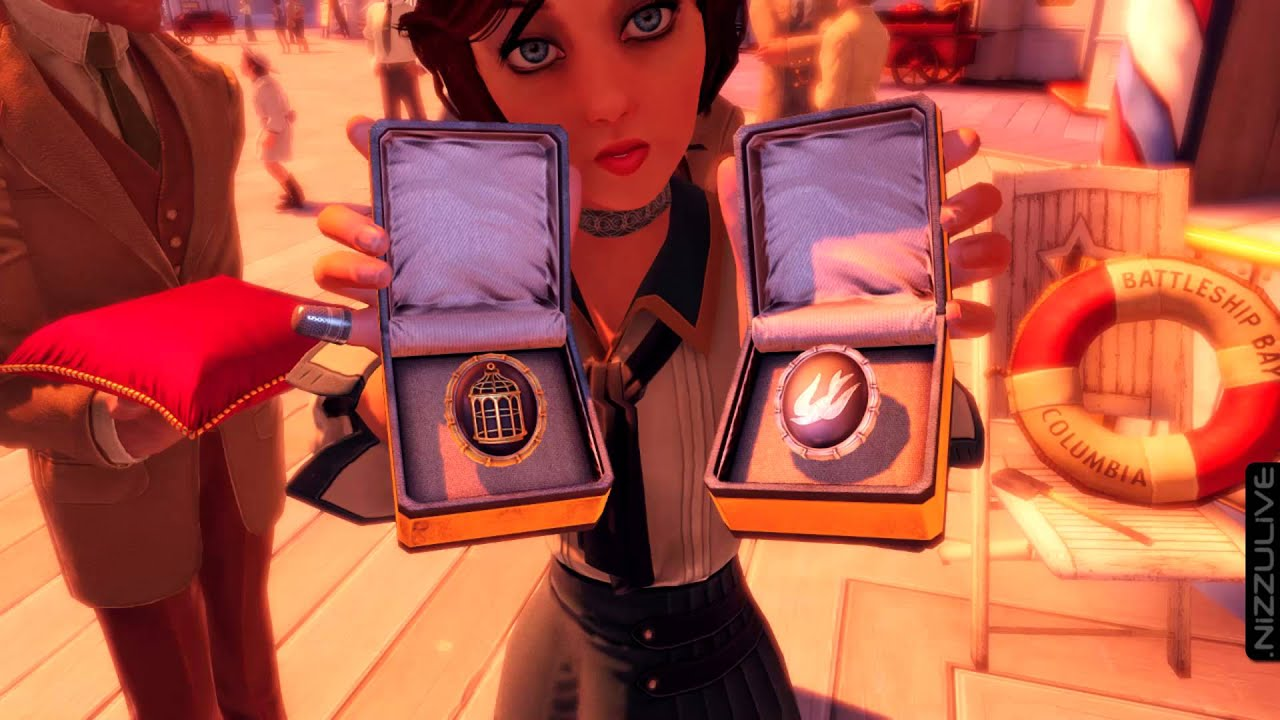
At first, these choices appear meaningful. But as the narrative unfolds, the game reveals a disturbing pattern: no matter what you choose, certain outcomes remain constant.
“There’s always a man. There’s always a lighthouse. There’s always a city.”
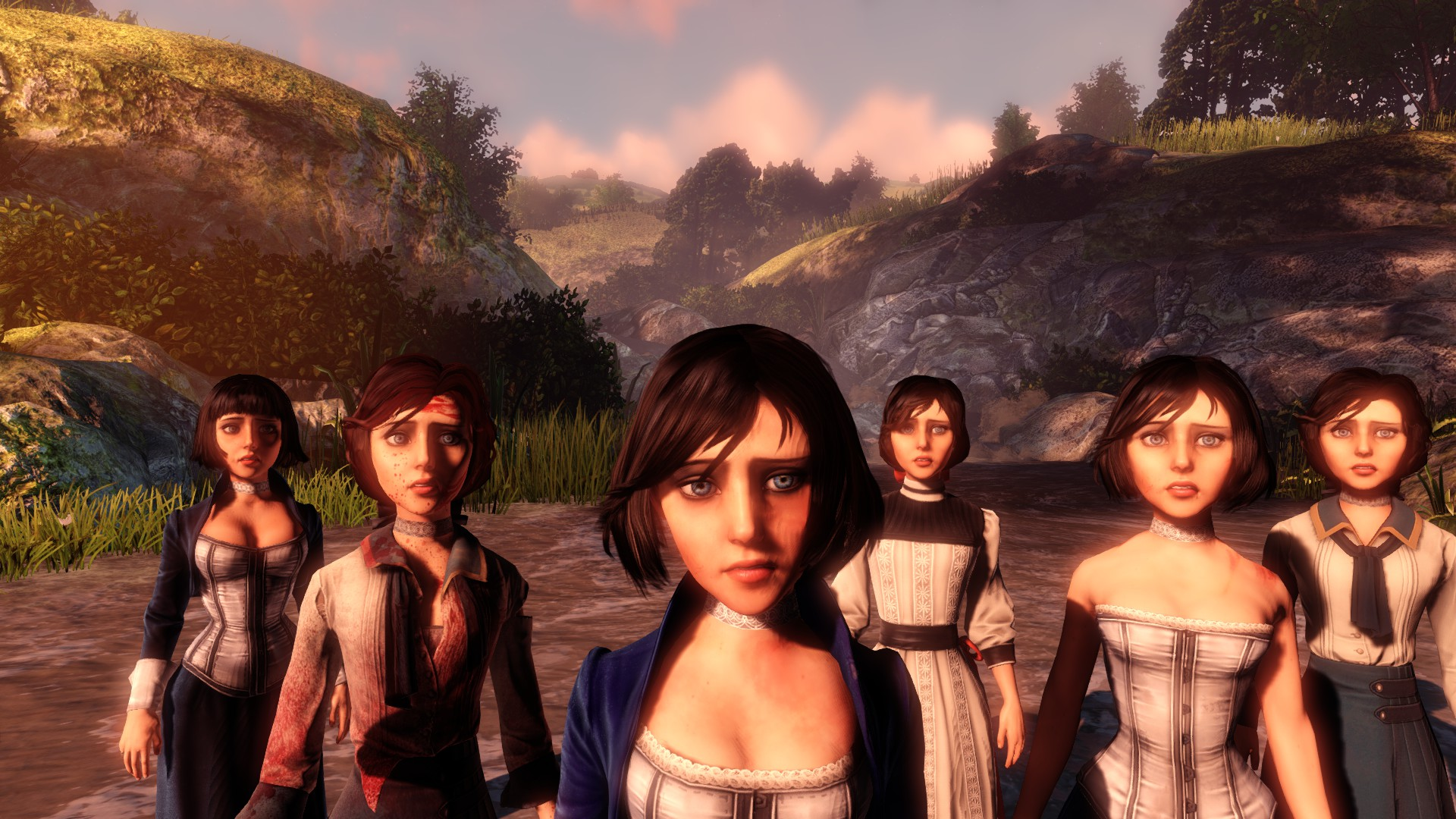
The game is not offering branching narrative freedom. It is demonstrating constrained variation.
This is not a flaw. It is thematic design.
The structure of limited choice mirrors the theme of determinism. The gameplay system quietly reinforces the narrative argument: you are moving forward, but you are not truly free.
Respawn and Multiverse Logic
In many games, death is a mechanical reset. In BioShock Infinite, death becomes diegetic.
When Booker dies, the player does not simply reload. Instead, Elizabeth pulls him into another version of reality.
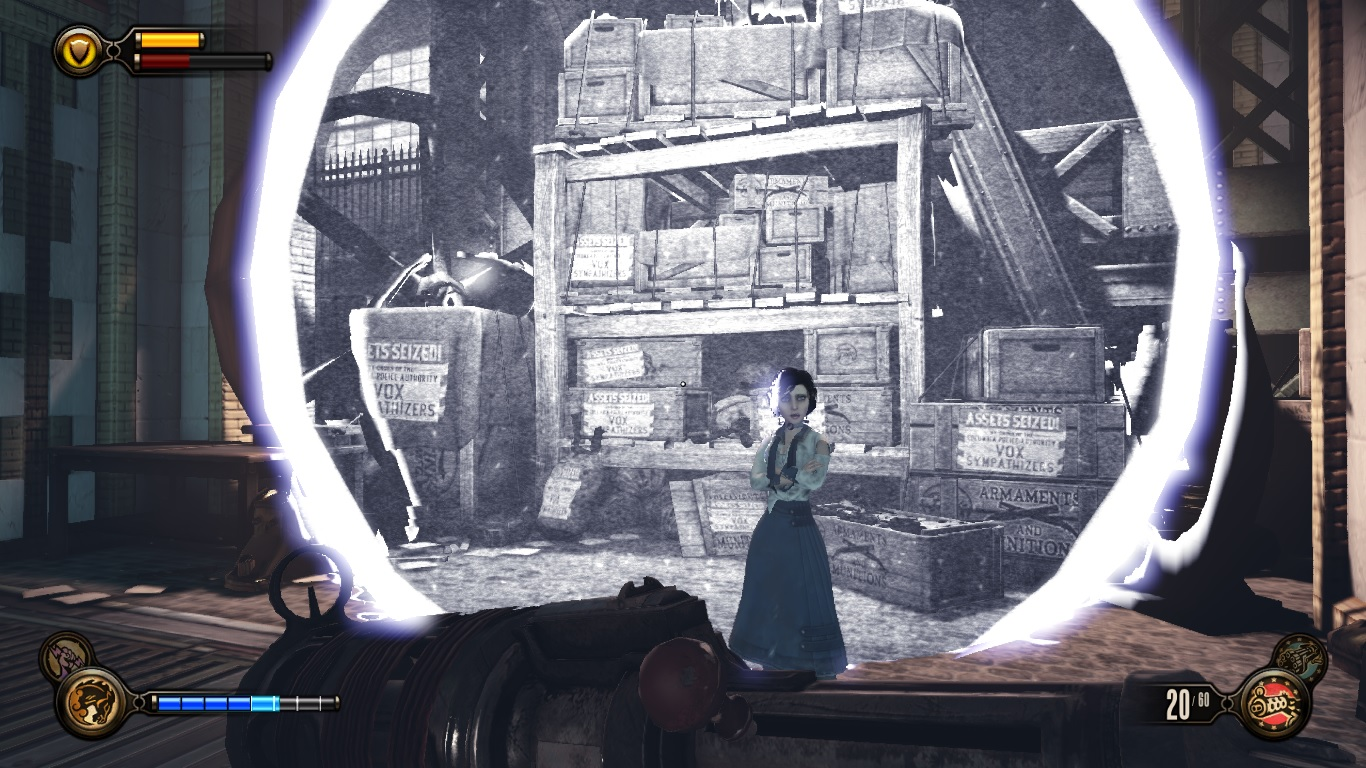
The respawn mechanic is narratively justified.
This is structural alignment: the rules of the system are the rules of the universe.
Death does not contradict the story — it confirms it.
The multiverse theme is not only explained through exposition. It is experienced through repetition, alternate realities, and structural loops.
Linear Design as Philosophical Statement
Unlike many RPGs that promise freedom, BioShock Infinite remains largely linear.
There are no radically branching storylines. No diverging endings based on player morality.
The lack of branching becomes part of the argument.
The game asks: What if your perception of agency is only structural containment?
Instead of designing for maximum freedom, the game designs for thematic consistency.
Here, the constraint itself becomes narrative.
In BioShock Infinite, gameplay does not generate emotional survival tension. Instead, it builds a structural metaphor.
Limited choices express determinism.Respawn expresses multiverse logic.Linearity expresses philosophical constraint.
The system architecture becomes thematic architecture.
When structure aligns with story, gameplay becomes narrative argument.
IV. Three Design Conditions for Gameplay Becoming Story
Looking across The Last of Us and BioShock Infinite, we can identify three conditions under which gameplay truly becomes narrative.
1.Mechanics Must Reinforce Theme
If the theme is survival, the mechanics must create vulnerability and scarcity.If the theme is determinism, the structure must limit freedom.
Mechanics are not neutral systems. They carry emotional and philosophical meaning.
2.Player Action Must Carry Emotional Weight
A mechanic becomes narrative when the player’s action expresses something beyond efficiency.
In The Last of Us, pulling the trigger in the hospital is not just a combat action — it is a moral act.In BioShock Infinite, continuing forward despite the illusion of choice reinforces inevitability.
When players feel responsible for what happens, gameplay transforms into storytelling.
3.Experience Must Replace Explanation
The strongest narrative design does not rely on exposition.It allows players to feel the theme through interaction.
You do not need a character to say “this world is cruel” when scarcity makes you hesitate to use your last bullet.You do not need a monologue about fate when the structure of the game denies meaningful divergence.
When the system teaches through experience, gameplay becomes narrative language.
Conclusion
Successful narrative games do not attach story to mechanics as decoration. They align mechanics with theme, structure with philosophy, and player action with emotional consequence.
In these games, cutscenes enhance the experience — but they are not the source of meaning. The meaning lives inside the rules.
When gameplay becomes story, narrative is no longer something we watch unfold. It is something we perform.
For designers, this shift changes everything. Story is not written after systems are built. Story is built into systems from the beginning.
And when that alignment happens, the medium reaches its full expressive potential.